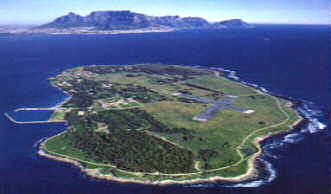
ROBBEN ISLAND
Childhood Memories - A Personal Reflection by Michael Klerck
|
ROBBEN ISLAND Childhood Memories - A Personal Reflection by Michael Klerck
|
|
|
Four hundred and sixty seven years
after Bartholomeu Dias sailed into Table Bay and set eyes on Robben Island
in 1488, I 'set foot', in the arms of my mother, little knowing that I would
spend the most impressionable years of my childhood there. One of Dias's captains, Jao del Infante, in Dias's second ship, landed there sometime after him "to molest the seals and penguins." It seems that ever since then the island has, in some way, been molested. Van Riebeeck and his successor saw the potential of the island as a prison. The name "Robben" is derived from the Dutch for seals - robbe. The British kept prisoners on
Robben Island and in 1845 Lord Charles Somerset had lepers moved to the
island where they were to "live and die unwanted on an island of terror".
Many ex-inmates of the prison,
including President Mandela, see the island as a special place. So do I, but
then from a slightly different perspective. The first four years of my life
were filled with happy memories of "the island" as my home. Far from being
just a prison, it was first an army and then a naval base where my parents
met and were married in 1953. While various nations of the world spoilt and abused it, there is no doubt that nature intended it to be special. My father, a naval officer at the time, with the sanction of Doctor Hey, Director of Nature Conservation, turned an area into a nature reserve. A 'Noah's Ark' berthed in the harbour sometime in 1959. They stocked the island with tortoise, duck, geese, buck (which included Springbok, Eland, Steenbok, Bontebok and Fallow Deer), ostrich and a few wildebeest which did not last long. All except the fallow deer are indigenous to the Cape. Many animals are still there including three species of tortoise - the most recently discovered in 1998 - two Parrot Beaked specimens that have remained undetected until now. The Leopard or Mountain tortoises might have suspected the past terror; perhaps they had no intention of being a part of a future infamy, but they often attempted the swim back to the mainland (they are the only species that can swim). Boats would lift them out of the sea in Table Bay and return them to us. None of the original 12 shipped over remain and in 1995, 4 more were introduced - they seem to have more easily accepted their home as they are still residents. One resident brought across a large Leopard tortoise discovered in a friend's garden in Newlands, Cape Town. He lived in our garden and grew big enough to climb over the wall and roam the island much like the sheep in Van Riebeeck's time. As children we were able to ride his great frame comfortably, as did some grown men. The buck and ostriches seemed equally happy and the ducks and Egyptian Geese were assigned a home in the old quarry, which had, some three hundred years before, supplied the dressed stone for the foundations of the Castle; at the time of my residence it bristled with fish. Regrettably, recent reports in Cape Town newspapers show that a lack of upkeep and the proliferation of rabbits on the island has led to the total devastation of the wildlife; there remains today almost none of the animals my father brought over all those years ago; the rabbits themselves have laid the island waste, stripping it of almost all ground vegetation. It looks almost like a desert. A reporter from the broadcasting corporation told me recently that they found the carcass of the last bontebok.
Amazingly, I was reminded of her the other
day when I walked into Cafe Verdi, a pub in Wynberg, and saw a young man with a Dalmatian
pub at his feet. I was telling my friend, next to me, the story of
Zsa-Zsa - the young man overheard me and said he had read about her in the SA Navy archives, bought
his pup
and named her after the original.
See Video footage of the island, circa 1958 ...
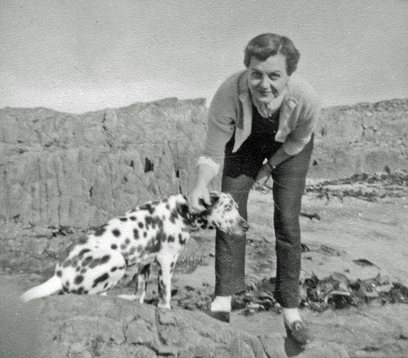
The dog I remember so well was my spaniel Lindy - soft and gentle enough to put
up with my favourite pastime of sticking my fingers in her ears and sitting
on her, and faithful enough to sleep under my pram and
growl at anyone who came near. The island, as you can imagine, was her
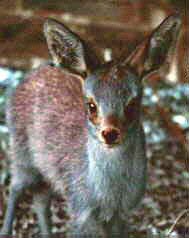
paradise - rabbits or wild hares and birds to chase but seldom catch. One animal which was an integral part of my happy childhood, was a buck called Bambi - what else?. She came across on the 'Ark', alone and frightened. Her parents had been killed in a typical Cape fire. My mother assigned her to the empty chicken-hok at the bottom of the garden and she spent some time with us before being introduced into the 'wild'. I fed her three times a day from my redundant bottles and the special childhood memory of her sucking my finger at the end of each meal lives with me. I can still almost feel her diminutive tail flicking through the air with uncontrollable excitement at the sight of me. Or was it the bottle? All the inhabitants on Robben
island knew each
other well. There was no crime, and nothing can take the place of growing up
in a completely safe environment. I call it an island mentality - the
feeling of being part of a special community ran through to everyone. My
grandfather, then a retired Colonel and near the end of his life, had a
frightening experience while pushing me in a pushcart far from our home. He
fell badly and could not get up. I lay on my side, still strapped to my seat
and, while he struggled to rise, my only attempt at showing sympathy was a
bout of uncontrollable laughter. Luckily for both of us a member of the now
disbanded Cape Corps drove past in a troop carrier, helped both the old man
and myself up, and returned us to our home. I was recorded as being
indignant at his ending what I considered a unique adventure. My mother's penchant for
organising took expression in a massive Carols by Candlelight with a
nativity tableau in which nearly all the inhabitants of Robben Island took part. The naval
tiffies constructed large wings for the Archangel which consisted of real
feathers, and the halo surrounding her tall frame was embedded with lights
which she controlled by means of a switch. The stable and manger were
constructed by volunteer sailors, carpenters and artificers. The
floodlighting was provided by my father and the head of the PWD (public
works department) who both battled against a raging Southeaster. I, at the
age of four, was the stable boy. The feeling of apprehension and excitement
as I walked into the floodlit stadium, leading Mary's donkey, is still with
me. The choir was given additional volume and depth with the naturally
harmonizing voices of the black and coloured inhabitants. Few, if any,
inhabitants were in the stands - just about everyone was in the tableau
itself - but we did get eager support from friends and family who came over
especially for the event. The sound of Silent Night still
today evokes the memory of the small children of the island walking up,
hesitantly, to peer at the babe in the manger and deposit their gifts which
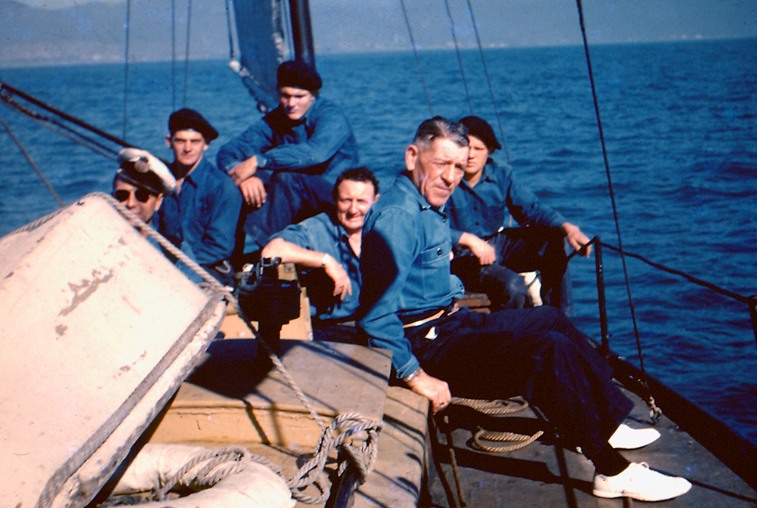
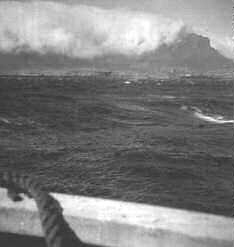
were later dispatched to an orphanage in Cape Town. Some inhabitants, including a few high-school pupils made the trip to the mainland each weekday on one of the two ferries - the Issie (named after Mrs. Smuts) and the Wolraad Woltemade. I sometimes made the journey sans mother but with my Nanny to meet my grandmother under the old station clock at the Cape Town station. Today we smile knowingly at Capetonians reveling in the Waterfront. The ferries berthed at the Victoria Wharf and the harbour cafe was a familiar stop back then. Nothing can match a stormy sea on a Sunday afternoon with the prospect of returning to our haven after a weekend in the wild city. There were the sailing trips on Caprice and other yachts; catching crayfish from small dinghies, and the night-time fishing expeditions by torch.
Capetonians are famous for the
appreciation of their heritage and the Navy, famous for its hospitality,
decided on an open day. Navy and civilian inhabitants braced themselves for
the influx of a one or two hundred people. I can remember a great throng of
many hundreds and the ferries and their exhausted crews were busy well into
the night returning them to the mainland. A weary island population spent
most of the latter part of the day in search of wayward Capetonians who had
wandered all over, some thinking a night on the island preferable to
returning to town. I was familiar with the
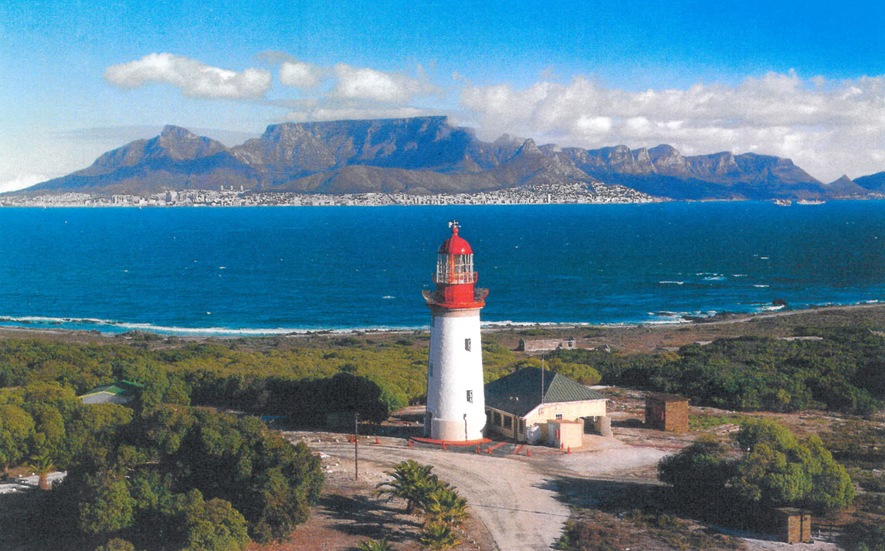
mechanics of the lighthouse - a special privilege for a young child, but
just another part of life on the island. Mornings meant gathering in
the library where my mother become, magically, a teacher and read to a class
of pre-school children. There was a large swimming pool at the Mess. Knowing
my love affair with water today, it is strange to vividly remember how
frightened I was of it. My mother could no longer take my whimpering one day
and hurled me in the deep end (I did have arm bands) - she then couldn't get
me out!
My Nanny
and I walked each day, right across Robben Island. Long, safe walks of
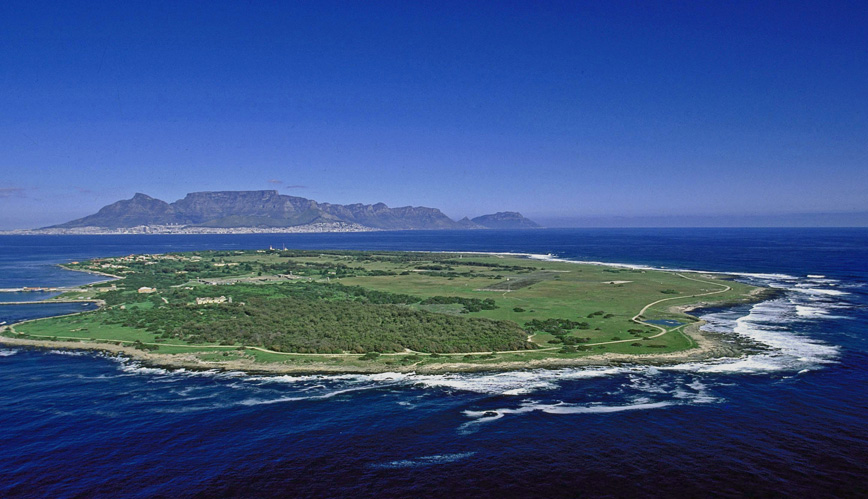
discovery. The bird life was and must still be magnificent, and the view of
Table Mountain cannot be matched even from the palatial homes of
Plattekloof, one of the posh northern suburbs today. The island farm was a
favourite and a visit to the milking sheds was not complete without a search
for the resident mole snake who was assigned a 'bunk' in the rafters in
return for a diminished rat population. I cannot remember whether, like Able Seaman Just
Nuisance, it was assigned any rank though. Near the farm were the remains of
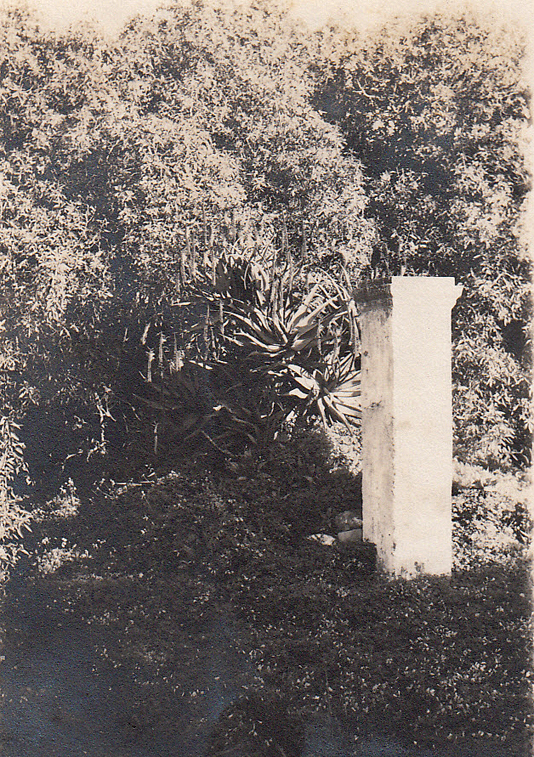
a beautiful private garden tended by the Matron of the leper hospital and which had
flourished in spite of the fire which had destroyed that part of the island when the lepers
were removed. The rambling roses and variety of shrubs seemed to grow in
colourful support of the courage displayed by all the people incarcerated
over so many years. It was a place many visited with quiet reverence, and
still do today.
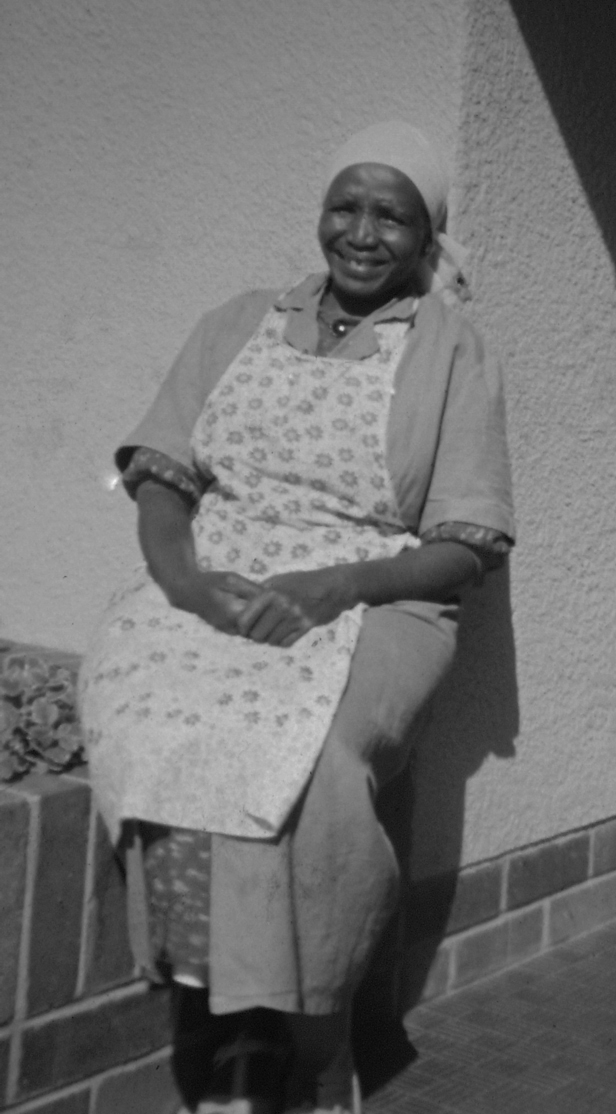
Nanny is gone. Many of the
prisoners are now well-known, immaculately dressed men, imprisoned in our
television sets and who speak of the island with ambivalent
reverence. In Ciskei there were always two claims to fame for political
leaders: imprisonment on Robben Island and also by one of Ciskei's regimes.
My own personal claim to fame, and a wonderful dinner startler is that I was
born on Robben island. The fact that I moved there when I was a few months old and was,
in fact, born in the Gardens Cape Town, has never perturbed me. My mother,
however, often reminds me of my indiscretion. I put it down to poetic
license; I'll not change my CV for anything! She, in fact, like others,
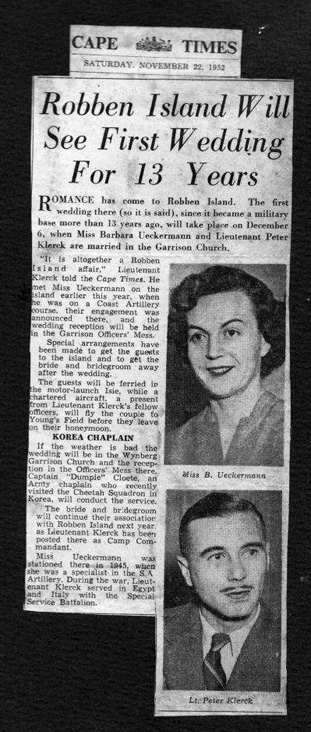
served in the Army there in 1942 and then again in 1946. She met my father
there while visiting friends and they were married on the island in the
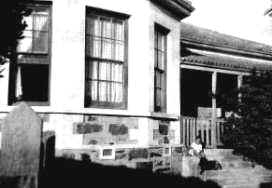
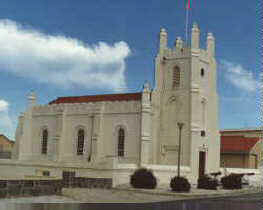
Anglican church (pictured opposite) in 1952.
No development besides a careful reconstruction of the architecture and natural beauty can give any justice to it's rich history and the many conflicting memories.
There cannot be any doubt, either, that those
friendly prisoners would have liked to have experienced the island as I did.
Far from being just a "dumping ground for (offenders)", as one editorial in
a Cape Town newspaper portrayed it recently, Robben Island has played
host to a great deal of 'normality' and even celebration.
Perhaps then, it is fitting to
relate one last memory. One day a work-detail of prisoners arrived at our
front door. I clung to my mother's side while the spokesman for the group
handed over a gift roughly wrapped in brown paper. They had heard from Nanny
that Bambi had been released - I had lost a friend and they wanted to show
some solidarity. They had carved, lovingly, and probably with very primitive
tools, the gift of a wooden spoon. The spoon took pride of place in the kitchen and always reminded me that along with the memory of a very special place, there are always memories of special people on Robben Island itself. [All quotes and historical info. other than personal recollection taken from Robben Island by Simon De Villiers, Struik, 1971.] More pictures of the Island, nearly one hundred years ago: The Robben Island Staff photograph; the Leper Staff; cricket, Dr Budd, the Superintendent...Go Here. Wartime pics from my mother's album, and some unknown photographs from other collections, here... I really enjoy getting feedback. I have had wonderful emails from kids and adults all over the world. Even touching stories of others who grew up there, before or after my time...please don't hesitate to contact me - I shall include your email on my Memories Page. Thank you for sharing this with me.
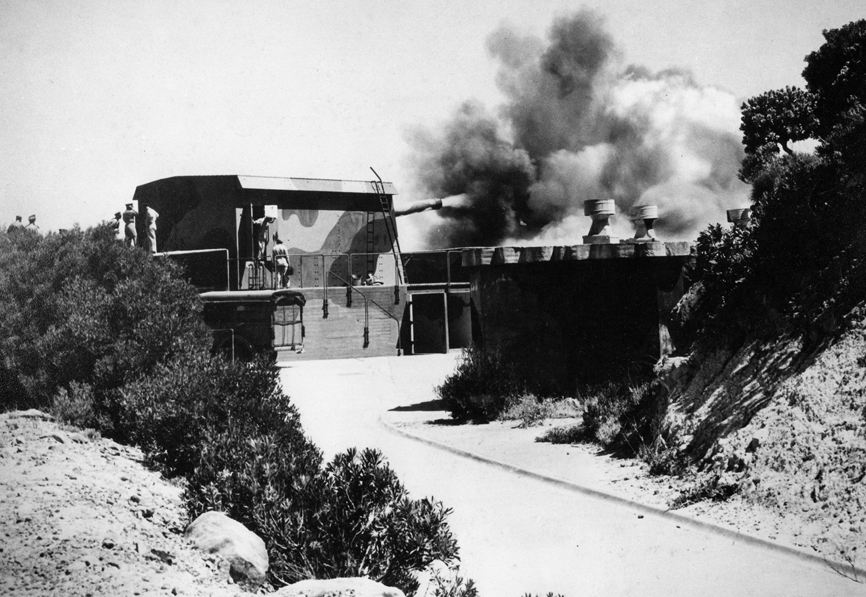
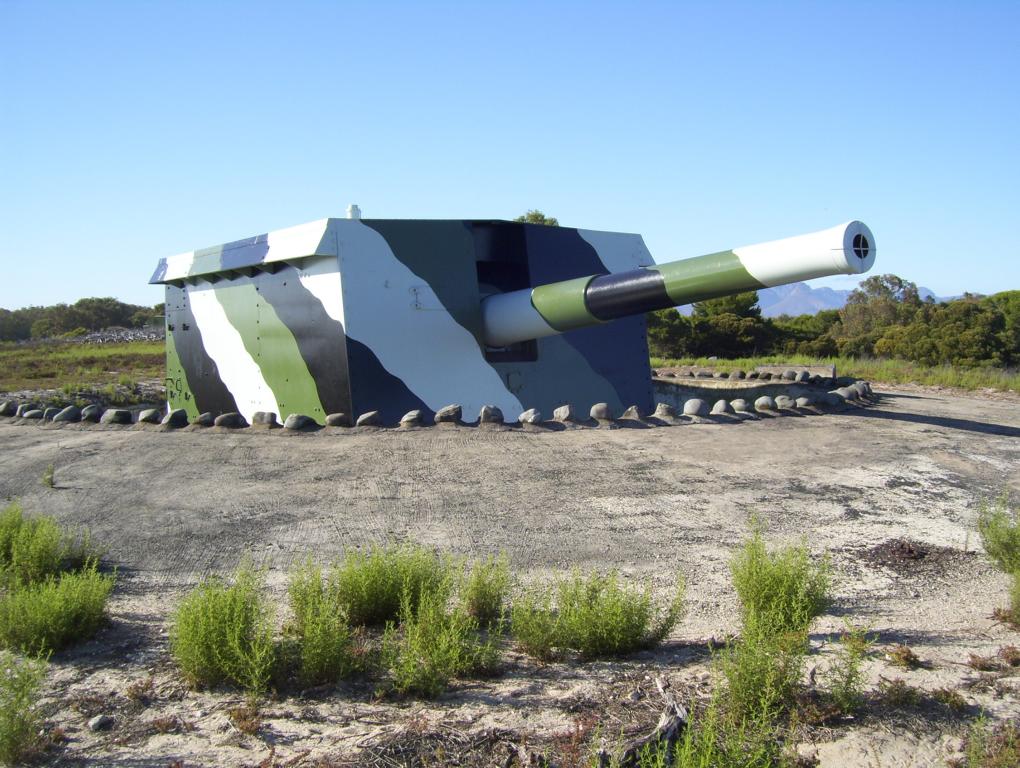
Please also visit: Battle For Robben Island - now finally won, we hope: My letter to the press that, together with sharp reporting from Freek Robinson and his television episode on Fokus, managed to highlight Robben Island's plight and, we think, eventually depose the corrupt officials. Today RIM is working hard to restore its image and make RI worthy of its World Heritage status. Links and emails from people all over the world. Many of the emails contain photos with people looking for lost relatives - it's worth a visit. Other photographs sent to me, or discovered in old albums... The Department of Public Works, together with MLB Architects have done a wonderful job in restoring the only semi-operational 9.2 inch gun in the world. This page is well worth a visit if you are in any way militarily minded. Walvis Bay 6-inch Battery: 1962 See slides of the construction of two guns on the coast outside Walvis Bay; a response to the Rooi Gevaar and Russian fishing trawlers who were apparently spying on us: see pictures of one of them ... See Video footage of the island, circa 1958 ... Pages relating the personal history of others:
Christo has a similar experience to mine, and although we met only later in life, we share the same fondness for Robben Island, and a desire to see it fully restored; read his story here ...
Dr Herbert Budd, Lisle his wife and Billy their son lived on Robben Island in the 1920's. Read their story and see some stunning shots of life on the island nearly one hundred years ago ...
You can also read about his visit to the Eastern Cape in South Africa to view Dr Budd's grave.... |
IF AT SOME POINT YOU LIVED ON THE ISLAND, PLEASE VISIT THE MEMORIES PAGE AND ENTER A SEARCH FOR A NAME, YOURS OR ANOTHER, AND READ THE LETTERS PEOPLE HAVE SENT ME, MANY ARE LOOKING FOR FAMILY AND FRIENDS, AND IT IS POSSIBLE YOU MIGHT BE ABLE TO HELP...
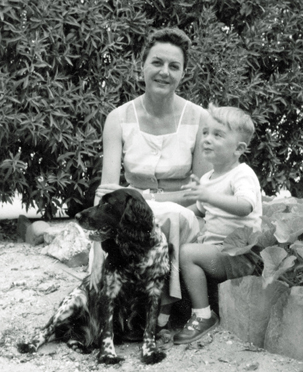
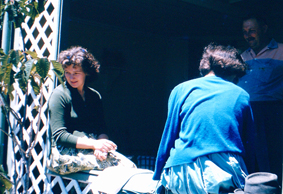
My faithful dog, Lindy and Barbara, my mother in our garden, 1958.
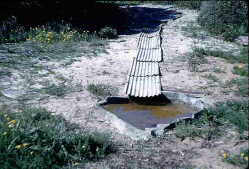
I remember my father taking me to inspect this special place he had set aside for the animals - water was scarce on the island, and every drop was precious...
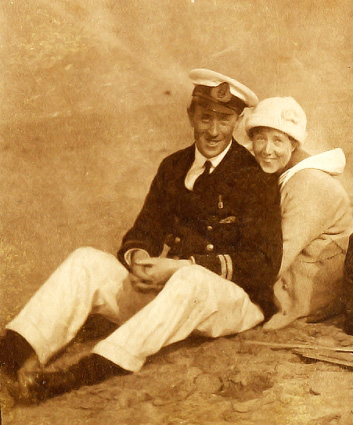
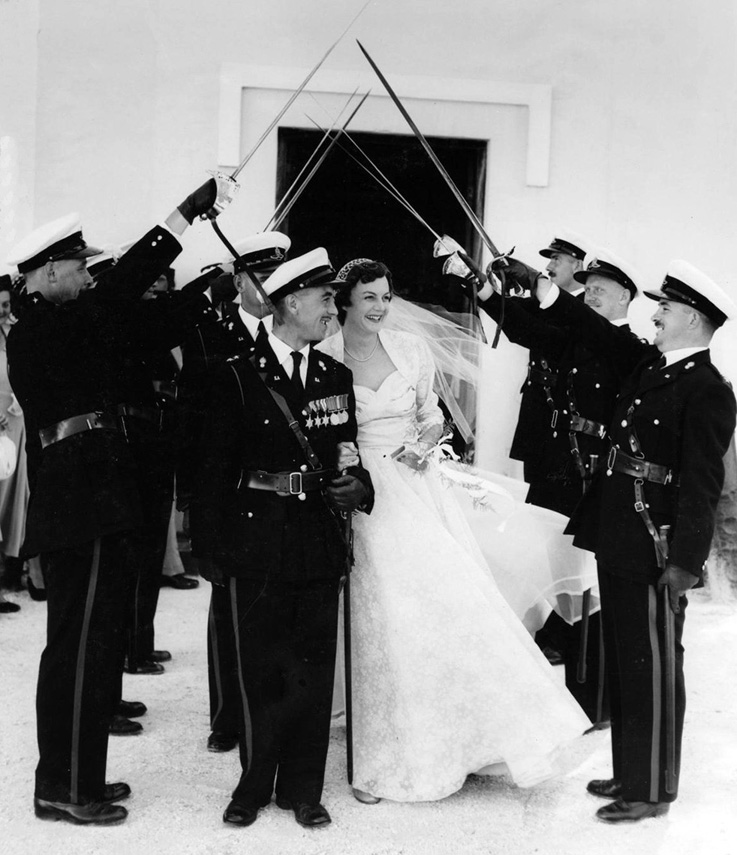
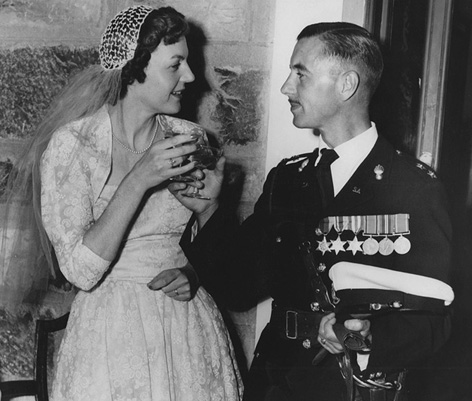
My parents, Barbara Ueckermann & Peter Klerck met on Robben Island just after the war for the first time, and then married there in 1952...
In loving memory of Barbara Ueckermann/ Klerck/Olivier who passed away at 89, June 2013. Thank you for all the precious memories and special moments that all started here on the Island...
Leper's Garden - circa 1946 while my mother was stationed on Robben Island. It is all but descimated now.
Bambi. This 55 year old slide was difficult to adapt, save and enhance - but here she is. My father rescued her when her parents died in a Cape fire; part of my daily chore was to feed her with milk from my old bottles. She used to suck my finger so powerfully, I remember panicking the first time she did so. Her descendents have roamed the island freely until the recent devastation of the vegetation due to bad management and a proliferation of rabbits; now all animals save the fallow dear are dead. Ironic that indigenous animals have not survived, while those from Europe have.
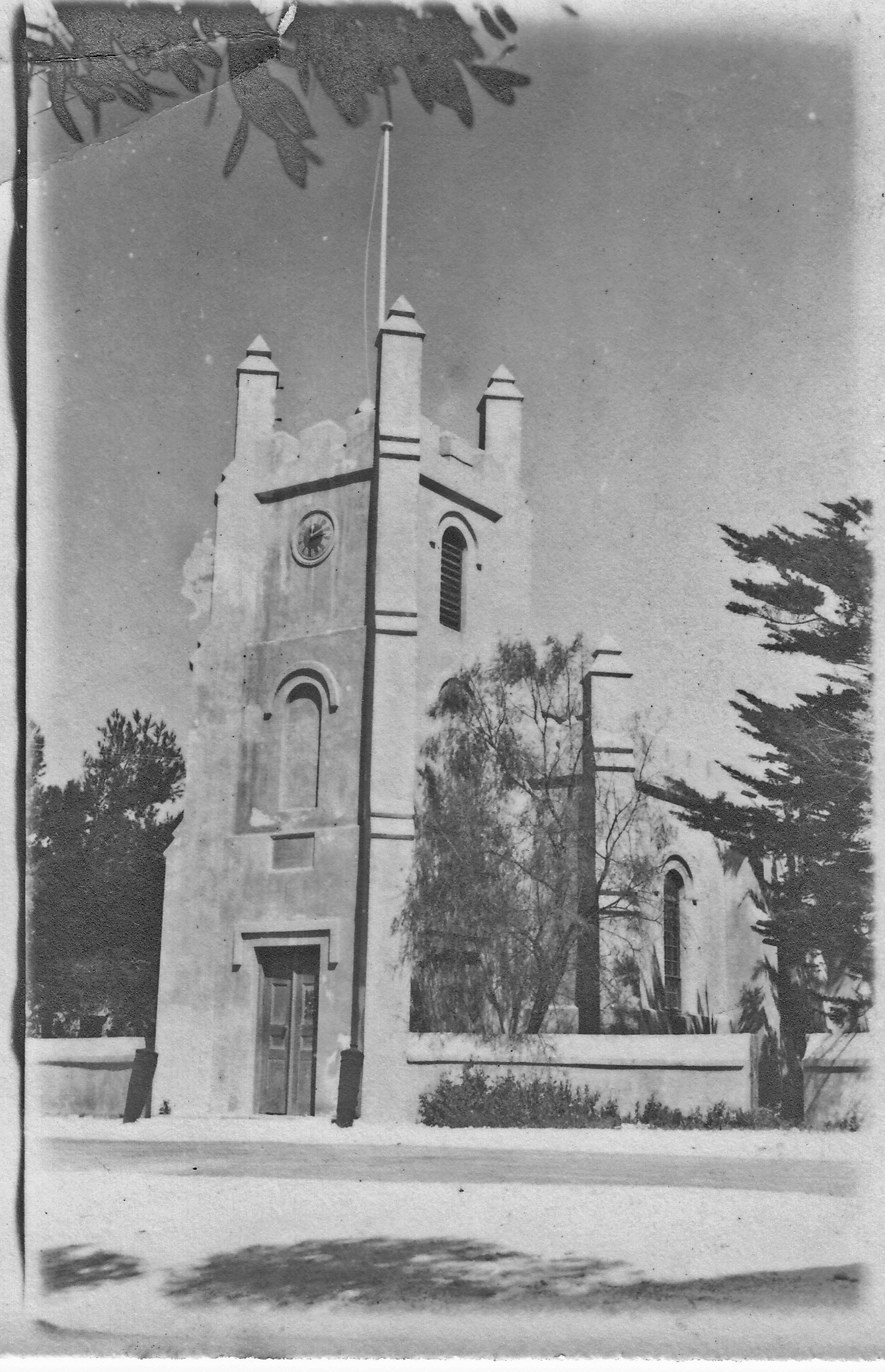
The Anglican church in the main street - built from local stone taken from one of the quarries on the island in 1841. Top picture taken in my time; bottom, circa 1946 from my mother's album. My parents married here in 1952. The church has recently been restored, and is the only privately owned building on the entire island, with all other buildings belonging to the state. I took my mother in her eighties on a tour. Sadly we had to dislodge ourselves from the bus and insist that we be allowed into the church for one last visit - for some reason the RIM does not allow people to walk around the island - not even the little main street - bizarre, as one would imagine they have nothing to hide. What a pity it is not a place of celebration also.
Restoration Of 9.2 inch Gun...
Finally ... the restoration is complete. My mother "manned" this gun during the war [WW2], waiting for German submarines that never arrived. Her position was way down in the plotting room under ground. We took her up to her old Scala battery in Simon's Town just the other day; and at 84 she was still able to walk around them, saddened, no doubt, by their state of disrepair.
Congratulations to the Robben Island Museum and MLB Architects for a stunning job. See a few more pictures:
|
|
|
Please Also Visit...
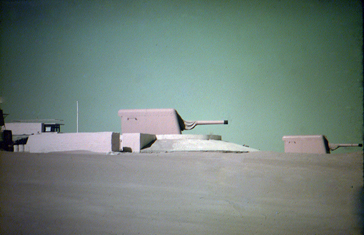
See also account and many pictures of construction of gun battery at Walvis Bay in 1962:
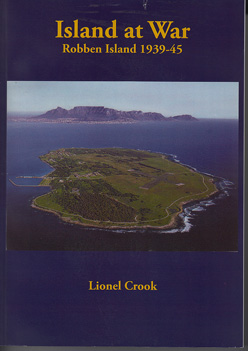
ISLAND AT WAR - a new publication -
Books may be ordered from the Naval Heritage Trust: P O Box 521, Simon’s Town, 7995. Orders can also be made by email either to R Adm Chris Bennett SAN (Rtd.) at wiggyben@gmail.com or to Lt Cdr Leon Steyn at leonsteyn70@gmaill.com
|
|